2026
Maket x Lib Work: AI-Powered Home Design for Japan
Maket and Lib Work team up to bring generative AI floor plan generation to Japan's housing market.

Caroline Boulard
Head of Growth
7 min read
Maket has partnered with Lib Work, one of Japan's largest publicly traded residential builders, to launch the country's first generative AI housing design system. Our AI floor plan generator, trained on Lib Work's blueprint database, lets builders and homebuyers explore multiple layout options and 3D visualizations in minutes. With Japan's construction backlog at a record $103 billion, the timing could not be better.
A housing industry under pressure, everywhere
Whether you look at North America or East Asia, the residential construction industry is stretched thin. In the U.S., 7.2 million affordable rental homes are missing for low-income renters (NLIHC, 2025). More than half of all American renter households now spend over 30% of their income on housing (Harvard JCHS, 2024). In Canada, the construction sector faces a wave of 270,000 retirements by 2034, with total recruiting needs exceeding 800,000 workers over the next decade (Deloitte, 2025).
The challenge is not just about cost. It is about capacity. There are not enough skilled workers, not enough time, and not enough flexibility in the traditional design process to keep up with what the market needs.
The partnership
We are excited to announce that Maket has partnered with Lib Work, one of Japan's largest residential builders, to launch the country's first generative AI-based housing design system.
Our AI floor plan generator is being trained on Lib Work's extensive database of Japanese residential blueprints. That means a platform built specifically for the Japanese market, producing multiple layout options in minutes, each one adapted to local building standards and the spatial realities of Japanese residential design.
Builders get a tool that handles the repetitive parts of the design process so they can focus on building. Homebuyers get to explore and customize personalized layouts with 3D visualization before a single wall goes up. We often call Maket the "Canva of architecture" because our platform makes it possible for anyone to create a floor plan and see it come to life in 3D, no architecture degree required.
"Our collaboration with Lib Work allows us to tailor our advanced platform to meet Japan's unique building standards. Together, we are paving the way for an optimized, AI-driven approach to residential design." — Stéphane Turbide, Co-Founder & COO, Maket Technologies

Why Japan
Japan's construction sector is at a breaking point. Unfilled construction orders have hit an all-time record of $103 billion (Nikkei, 2025). Construction cost inflation reached 5.6% in 2025 (Turner & Townsend). A significant share of the workforce is over 60 and heading toward retirement. And the traditional residential design process, which depends on individual architects working through lengthy approval cycles, was not built to handle this kind of demand.
At the same time, this is a $170 billion residential market projected to reach $210 billion by 2030. The opportunity is massive, but only if the industry finds new ways to work faster and smarter. That is exactly what this partnership is designed to do.
Lib Work: not your typical homebuilder
Lib Work is publicly traded on the Tokyo Stock Exchange and has built a reputation for pushing the boundaries of what residential construction looks like.
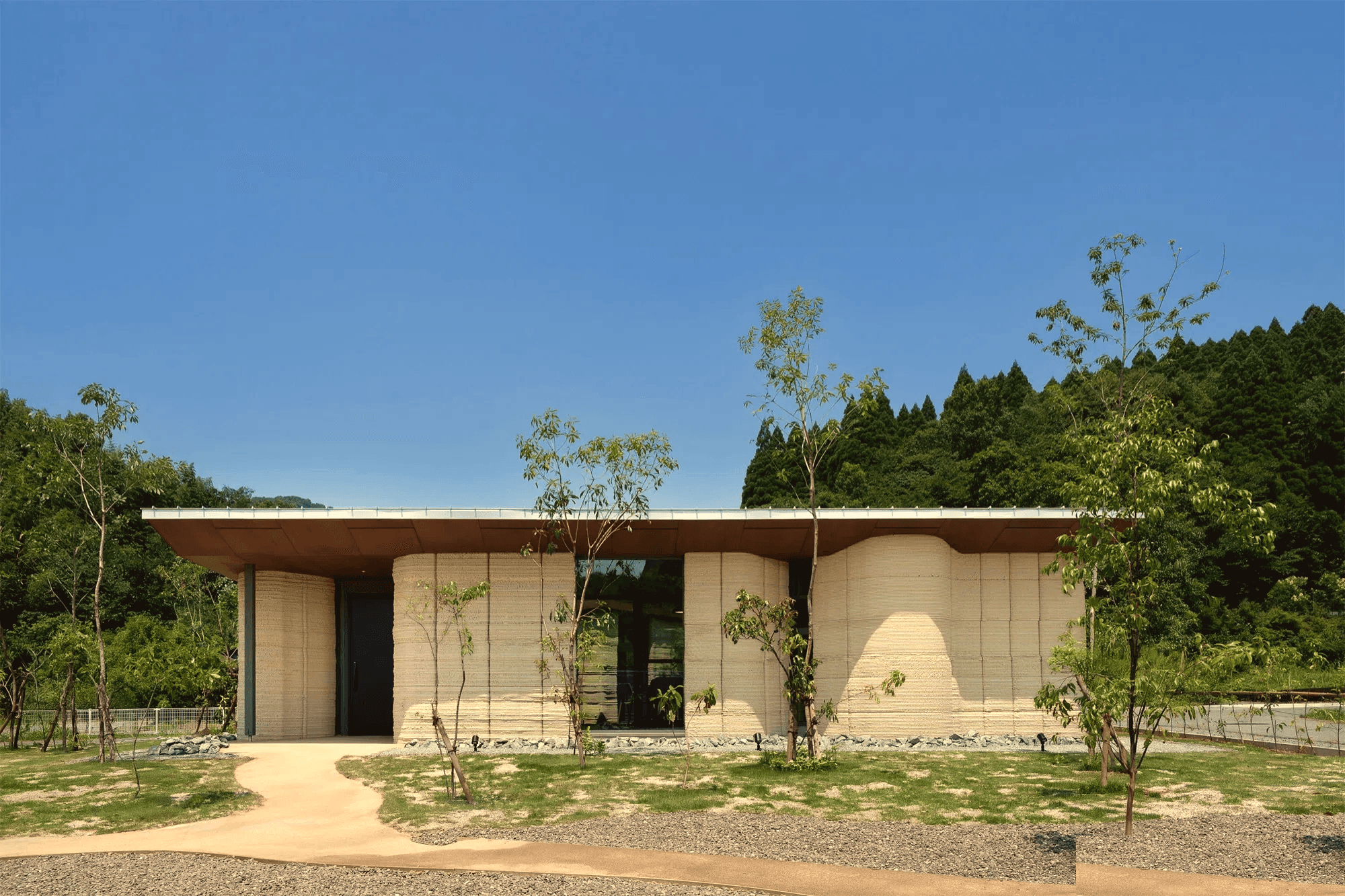
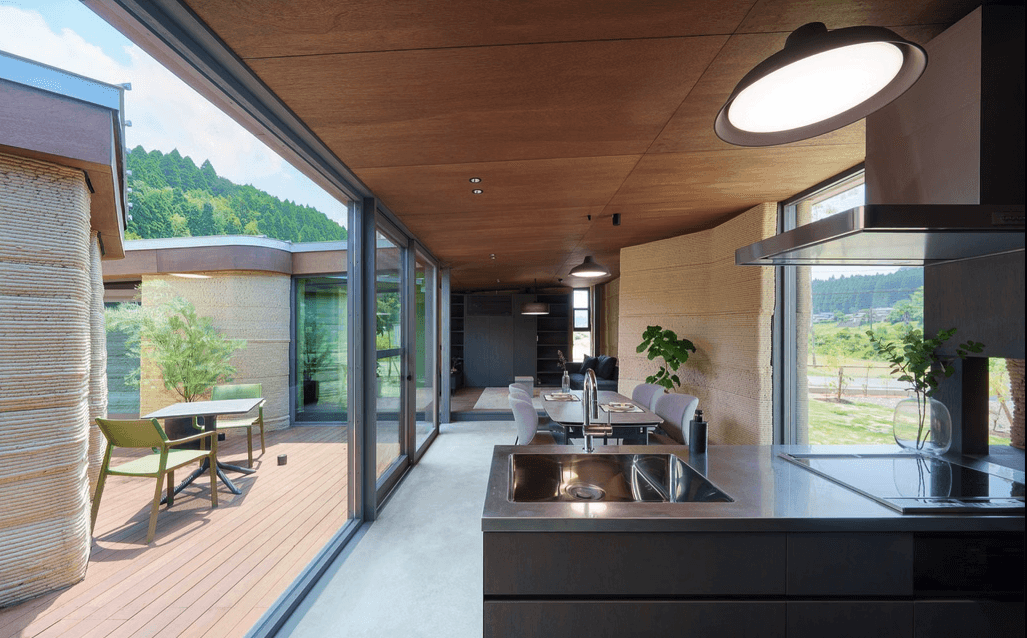
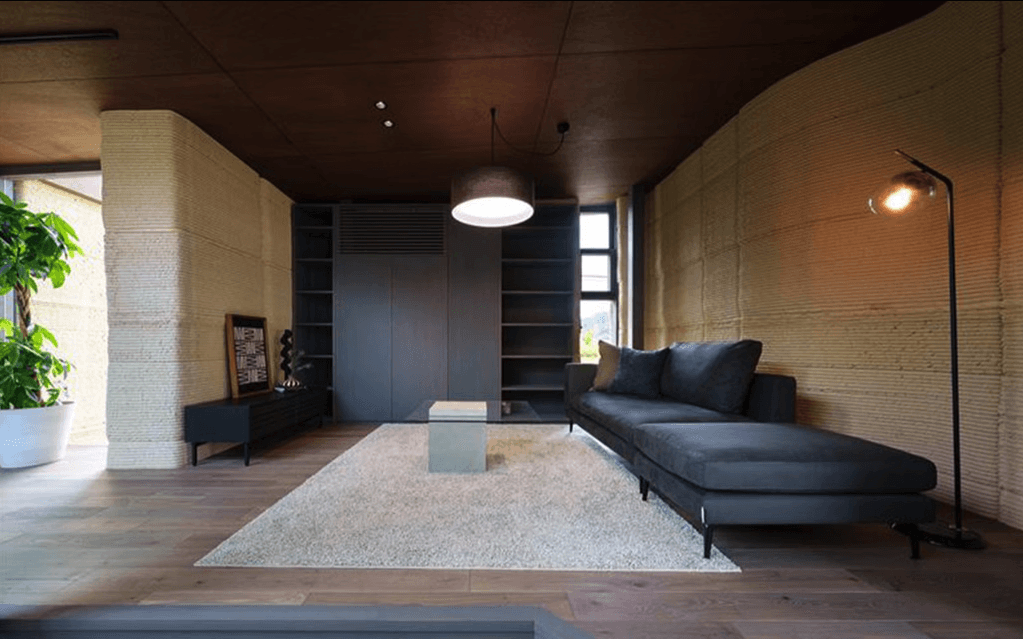
They completed Japan's first earth-based 3D-printed residential home: Lib Earth House Model B, a 1,000 sq ft structure built primarily from soil with no cement, cutting CO₂ emissions by 50%. The home runs entirely off-grid on solar and Tesla Powerwall batteries, and includes smart features like wall-embedded sensors, remote-controlled systems, and facial recognition entry. Developed alongside Arup, the project is part of Lib Work's plan to deliver 10,000 3D-printed homes by 2040.
Their President, Chikara Seguchi, has compared his approach to what Tesla did for the automotive industry: rethink everything from the ground up. Pairing that kind of ambition with Maket's AI house design capabilities is what makes this partnership different. It is not just about efficiency. It is about building the world's first fully AI-powered automated home construction system.
What this means for housing accessibility
When AI can produce architectural plans in minutes instead of months, something fundamental shifts. Design is no longer the bottleneck. Builders can iterate faster. Homebuyers can explore options that actually fit their needs and their budget. The entire process becomes more affordable, accessible, and sustainable.
Since launching in July 2023, Maket has generated over 3 million architectural projects for more than 1 million users across 22 countries. This partnership is the next chapter: bringing AI architecture generation to one of the world's most sophisticated (and most pressured) housing markets.
What's next
A first proof of concept confirmed that the platform can produce Japanese-style residential layouts, and algorithm training is now underway for a 2026 launch. From there, Lib Work plans to distribute the platform through OEM partnerships with other Japanese homebuilders and construction companies.
The housing affordability crisis will not be solved overnight, and it will not be solved by any single tool. But every step that makes quality home design faster and more accessible moves the industry in the right direction. This is one of those steps.
Want to learn more about what Maket does and how it works? Visit our site to explore the platform, or check out pricing.